 Afternoon
The Label on This Pocket Spray Was Written Under Europe's Rules, Not Ours
Focus Brain is a Swiss spray, five presses once a day. The health sentences on its label are copied word for word from Europe's approved list, and it reaches the US only through the seller's Swiss store.

This is a paid advertisement. Sponsored by EnergyBalance SA.

Dale Ridgeway is the pen name of this desk. Everything about the bottle on this page comes from the seller's own label, product listing, shipping, returns and company pages, read in September 2026.
Walt, the friend in these pages, is a composite of the readers who write to this desk, and no result is claimed for him. The seller's page has no customer reviews yet, so none are quoted here.
One practical note before anything else: if you live in the US, the seller's European store will not ship to you, and its Swiss store will.
The seller publishes no refund promise, and you can only return a bottle that is still sealed.
My slow hour starts a little after four.
The coffee has gone cold, the paper is folded to the crossword, and nobody needs anything from me for about sixty minutes.
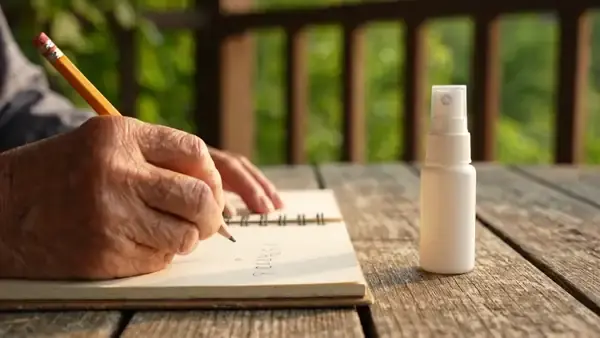
That is the hour Walt picked, last spring, to take a small white bottle out of his shirt pocket on my back porch.
He shook it twice, pressed the top five times into his mouth, capped it, and put it back next to his reading glasses.
The whole thing took about as long as it takes to check your watch.
I asked him what it was.
He said his daughter sent it from Europe, where she lives now, and that it tasted a little like a soft drink.
Then he handed me the box, because Walt knows what I do with boxes.
I read them, all the way down, including the parts nobody reads.
The box was mostly white, with a band of blue-green lettering.
Some of it was in German, some in English, and down one side ran a short sentence about a vitamin and "normal mental performance."
That sentence is where this page begins.
Not because it is a big promise, but because it is a small one, and the reason it is small is a law most Americans have never heard of.
I have spent a lot of afternoons reading American supplement labels.
I had never looked closely at a European one, and it turns out they are written under a different set of rules.
So this page is about three things.
The gesture of a spray you carry in a pocket, the European label that comes with it, and what it takes to buy one from here.
It is long, because the honest version of each of those three things takes a while to tell.
A Bottle That Rides in a Shirt Pocket
Start with the object, since the object is the first thing that makes this product different: a small white spray bottle, sold in a white and teal box.
It is called Focus Brain, and it is made by a company called EnergyBalance SA.
The company's address is Via della Salina 2, in Muralto, a small town on Lake Maggiore in the Italian-speaking part of Switzerland.
The bottle holds 25 milliliters.
That is a little under one fluid ounce, or about five teaspoons of liquid in a white plastic body with a pump on top.
It weighs almost nothing.
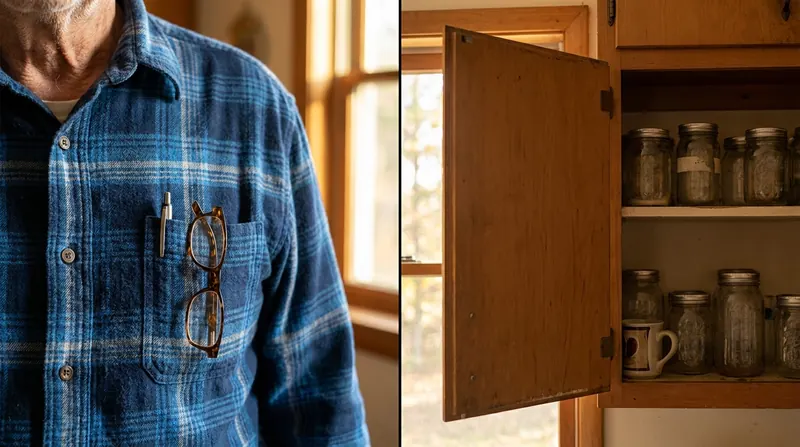
It fits in a shirt pocket the way a pen does, and Walt carries it exactly there, clipped in beside his glasses.
That matters more than it sounds.
Most of what men our age take in the morning lives in a cabinet, and this one lives on you.
The label says the bottle holds about 150 sprays.
At five a day, that is thirty days, give or take the few you lose to the first presses that prime the pump.
It is vegan and gluten-free, according to the label.
It has no caffeine, no alcohol and no sugar, and it is sweetened with xylitol, which comes up again further down this page.
The flavor, the label says, is "energising," and the seller's listing compares it to an energy drink.
Walt said it tasted like a lemon soft drink with the fizz taken out, which is about as much of a review as Walt gives anything.
None of that tells you whether it does anything, of course.
But it tells you what kind of object you are dealing with: small, quiet, and built for a gesture you can make anywhere.
Five Presses, Once a Day, and the Cap Goes Back On
The directions on the label are a single line.
"Shake well and spray 5 times directly into the mouth once daily, or as needed."

That is the whole routine.
You take it out, you shake it, you press the pump five times, you cap it, and it goes back where it came from.
There is no glass of water.
There is no scoop, no spoon, nothing to open with a knife, and nothing to swallow.
The "shake well" is not decoration.
The label notes that small amounts of sediment can form because of the ingredients, and a shake mixes the bottle before you use it.
Five presses is the daily dose.
Every amount the label prints is for those five presses together, not for one.
I say that twice on purpose, because it is the easiest thing to misread on the box.
When the label says 0.9 milligrams of vitamin B5, it means the total from all five presses.
"Or as needed" is the phrase at the end of the directions, and it is worth a word.
It does not mean more is better.
The label also says, in plain words, not to exceed the recommended daily dose.
So "as needed" here reads as "on the days you want it," not "as often as you like."
Five presses, once a day, and the cap goes back on.
I want to be fair about why a man would like this.
Walt does not like taking things with water in the morning, and he likes routines he can do while thinking about something else.
The spray fits both of those.
It is a small, repeatable gesture, and gestures like that are how habits stick.
That is a real benefit of the format.
It is not a claim about what the liquid does, and I will keep those two things apart for the rest of this page.
Two Labels, Two Sets of Rules
Here is where the afternoon got interesting for me.
If you have read an American supplement bottle, you know the sentence at the bottom.
It sits under an asterisk and says that the statements above it have not been evaluated by the Food and Drug Administration.
You will find that same sentence at the foot of this page, because this page is written for American readers.
It is required whenever a supplement sold here describes how an ingredient supports the body.
In the American system, the company writes that sentence of support itself.
It must be able to back the sentence up, and it must not claim to act on any condition, but the wording is its own.
That is why two American bottles with the same vitamin can say two different things about it.
One says "supports focus," another says "for mental energy," and a third says nothing at all.
The European system works the other way around.
A company selling food supplements in the European Union may only print a health sentence that appears on an approved list.
The list was published by the European Commission in 2012, and it covers vitamins, minerals and a handful of other substances. [1]
If a sentence is not on it, a label in Europe may not use it as a health claim.
And the company may not improve the wording.
It copies the sentence as the list writes it, and it may only use that sentence if the food holds enough of the nutrient to count. [1]
I found that genuinely surprising.
I had assumed "Made in Switzerland" and "regulated in Europe" were just marketing, and in this one narrow way, they are not.
To be fair to both systems, I am not saying one is better for you.
American labels can say more, and European labels can say less, and neither one tells you whether a product will do anything for you personally.
What the European rule does tell you is exactly where a sentence came from, and that is useful when you are reading a box on your porch.
Europe's List of Allowed Sentences
So I went and read the part of the list that applies to this bottle.

The vitamin in question is pantothenic acid, which is the chemical name for vitamin B5.
Under that regulation, the European Union allows four sentences for it. [1]
One says pantothenic acid contributes to normal mental performance.
One says it contributes to the reduction of tiredness, and one says it contributes to normal energy-yielding metabolism. [1]
The fourth is about the body's normal making and handling of certain substances it produces itself, including vitamin D.
It is technical, and nobody puts it on the front of a box.
Now look at the Focus Brain label.
Its health sentence is a stitched-together version of those same four, about pantothenic acid, and nothing else.
On Europe's list the wording reads "Pantothenic acid contributes to normal mental performance," and it may be used only if the food is at least a source of the vitamin. [1]
For a food supplement, a source means the daily dose holds at least 15 percent of the reference value, and that reference value is 6 milligrams. [2]
That sentence and its condition are the most useful thing on this page, so I will say it slowly.
The sentence belongs to the vitamin, not to the bottle.
Any food in Europe that holds enough B5 may say the same words, whether it is a spray, a bowl of cereal or a slice of fortified bread.
The herbs in the bottle, sage and bacopa, have no sentence on that list.
So the label says nothing about what they do, and it is right not to.
That is the part I wanted Walt to understand.
When his box talks about mental performance, it is talking about the vitamin, and only the vitamin.
The sentence belongs to the vitamin, not to the bottle.
There is one more thing in the regulation that I found oddly reassuring.
The list rests on what is already known about the vitamin's ordinary job in the body, not on a trial of this spray.
So the sentence tells you the vitamin does its normal work.
It does not tell you that adding a little more of it to a body that already has enough will change your afternoon.
Why the Vitamin Line Reads 0.9 Milligrams
Here is the number that made me put my pen down.
The label says the five daily presses give you 0.9 milligrams of vitamin B5.
That looks like an odd, small number until you do the arithmetic from the regulation.
European labelling law sets the reference value for pantothenic acid at 6 milligrams a day. [2]
It counts 15 percent of that reference value as the threshold for a significant amount, which is what a "source" has to reach. [2]
Fifteen percent of 6 milligrams is 0.9 milligrams.
The bottle holds exactly the amount it needs to be allowed to print its sentence.
I am not saying the company did anything wrong by that.
I am not saying anything about its intentions at all, since I only have the label and the law in front of me.
But I think you deserve to see the arithmetic.
The number on the box is the floor that lets the sentence be printed, not a dose picked from a study.
Now convert it to American terms.
The Daily Value the FDA uses for pantothenic acid on American labels is 5 milligrams. [3]
So 0.9 milligrams is 18 percent of the American Daily Value.
It is 15 percent of the European reference value, and 18 percent of ours, because the two systems use slightly different reference amounts.
Either way, it is a modest amount.
It is about a sixth of what the reference tables count as a day's worth, delivered in five presses.
For comparison, the vitamin is common in ordinary food.
Pantothenic acid takes its name from a Greek word meaning "from everywhere," because it turns up in so many foods.
That is not me knocking the bottle.
It is me telling you where it sits: a small, labeled, dependable amount of a vitamin most of us already eat every day.
If you want a vitamin sentence you can trust to the letter, this bottle has one, and it is sized to the legal minimum.
Two Percentages for the Same 0.9 Milligrams
If you ever see this spray described with two different percentages, neither one is a mistake.
Europe measures the vitamin against a reference value of 6 milligrams a day. [2]
The United States measures it against a Daily Value of 5 milligrams. [3]
The same 0.9 milligrams is therefore 15 percent in Europe and 18 percent here.
The liquid does not change when it crosses the ocean; only the yardstick does.
That is worth knowing because American labels print the percentage right beside the amount.
You are used to reading "18%" and moving on, and on this bottle it is the European yardstick that matters for the sentence.
Under European law, the 15 percent is not decoration.
It is the line the bottle has to reach before it may use its health sentence at all. [1]
Under American rules, 18 percent is simply information.
It tells you how much of a day's reference amount you are getting, and nothing about what the company may say.
I find the two numbers side by side quietly useful.
They show you, on one small bottle, the difference between a percentage that grants permission and a percentage that only informs.
Fifteen percent in Europe, eighteen here, and the same five presses.
Walt's response was practical, as usual.
"So I'm getting about a sixth of a day's worth either way," he said, and that is exactly right.
The Word Doing the Most Work Is Normal
Read the sentence again and underline one word.
"Pantothenic acid contributes to normal mental performance."
The word is "normal."
It is the most carefully chosen word on the whole package.
It does not say "improves."
It does not say "sharper," "faster" or "better than before."
It says the vitamin plays a part in your mind working the way it ordinarily does.
That is true of a great many nutrients, and it is exactly as far as European law lets any label go.

"Contributes to" is careful too.
It means the vitamin is one of the things involved, not the thing that decides the outcome.
I like this sentence, honestly.
It is the least exaggerated health sentence I have read on a box all year, and it is that way because a law made it that way.
But you should read it for what it is.
It is a statement about a vitamin's ordinary job, sized to a vitamin's ordinary amount.
"Normal" is not a small word on this box. It is the limit.
What Europe Checked Before It Wrote the List
A fair question at this point is who decided those four sentences were true.
The list did not come from the companies that sell vitamins.
It was built on scientific assessments of each nutrient's established role in the body, and the Commission then fixed the wording in law. [1]
That is a different question from the one you and I usually ask.
We ask whether a bottle will do something for us, and the list asks whether a nutrient has a known, ordinary job.
For vitamin B5, the answer to the list's question is yes.
The body uses it to turn food into usable energy, and it is part of how the mind does its everyday work.
But a known job is not the same thing as a benefit from taking more.
If your diet already covers the job, a little extra does not give the job a promotion.
That is why the wording stays at "contributes to normal."
The law lets a label say the vitamin does its work, and it stops before saying the label's buyer will notice anything.
I found that a comfortable place to stand as a reader.
It is not a sales pitch, and it is not a scare either; it is a description with the edges clearly drawn.
Walt, who spent thirty years as a machinist, put it better than I did.
"So it's rated for normal load," he said, "and nobody tested it past that."
Rated for normal load, and nobody tested it past that.
One more thing the list does not do is rank products.
It does not say this spray is better than a multivitamin, a bowl of fortified cereal or a plate of eggs and mushrooms.
All of those can carry the same sentence about B5 in Europe, if they hold enough of it.
The sentence is a floor that many foods can stand on, and this bottle is standing on it too.
Words on the Box That the List Did Not Write
Not everything on the box comes from the list, and it is fair to say which parts do not.
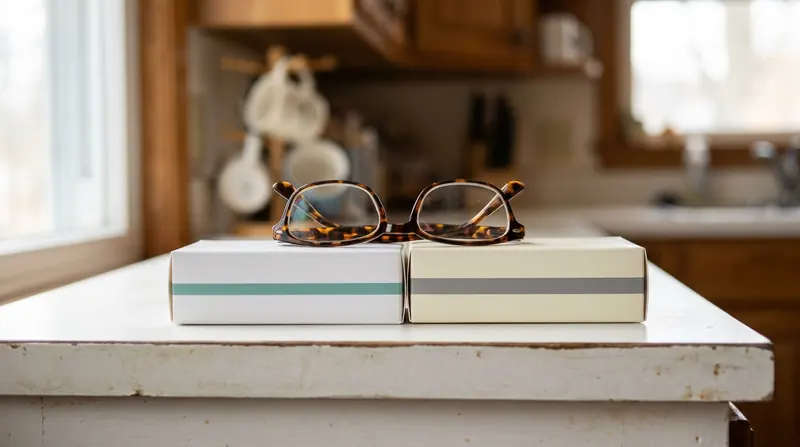
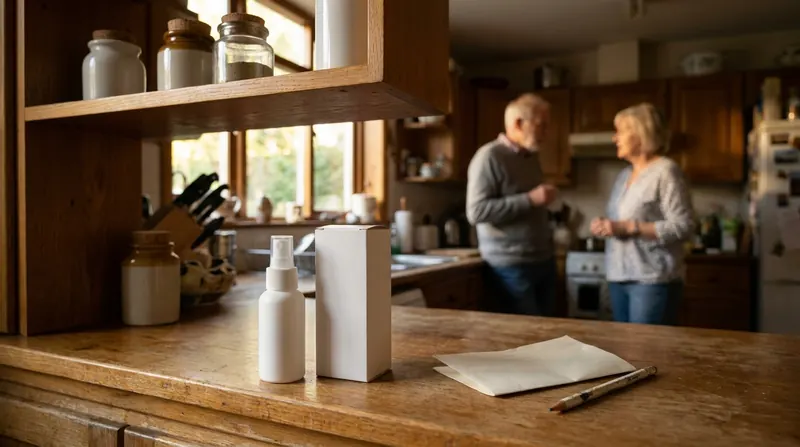
This is the moment to put the box itself on the table, with the bottle standing next to it, because the box is what the next few paragraphs read.
The bottle lives in Walt's shirt pocket, but the box went into a kitchen drawer the first week, and I had to ask him for it.
The front of the box says "Mental Focus."
That is a product description, and it is not one of the approved sentences.
The product name itself, Focus Brain, is a name, not a claim the list signed off on.
Names and descriptions sit in a looser part of the rules than health sentences do.
The seller's listing adds that the spray offers "rapid absorption" through the lining of the mouth.
It does not cite anything for that, and I could not find a study of this bottle that measures it.
So this page does not repeat it as a fact.
If a spray gets its vitamin in faster than food does, nobody has shown me the measurement for this one.
The listing also has a line calling the plant ingredients "carefully selected" and valued in European and Ayurvedic tradition.
That is a description of their history, not a statement of what they do.
One detail on the paperwork disagrees with itself.
The label prints the sage figure as 0.0144 milligrams, while the listing prints 0.144 milligrams, ten times as much.
This page follows the label, because the label is what is in your hand.
I mention the difference because you would want to know about it, and because it matters in the next section.
Reading the German on the Box
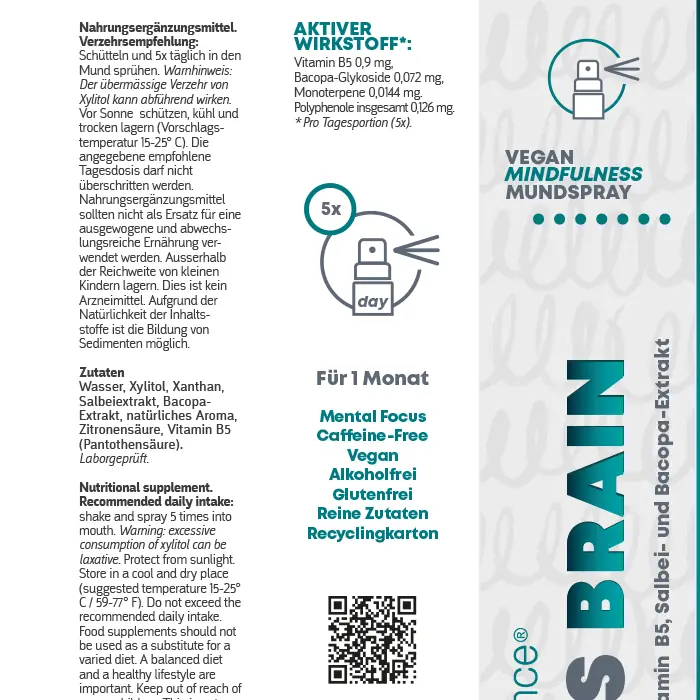
Walt's box was printed mostly in German, which is common for a Swiss product sold across Europe.
A few of its words are worth translating, because they tell you what the maker chose to put first.
"Für 1 Monat" means "for one month."
It matches the arithmetic: about 150 presses, five a day, thirty days.
"Alkoholfrei" and "Glutenfrei" mean alcohol-free and gluten-free.
They sit on the side of the box next to "Vegan," in the same small type.
"Reine Zutaten" means "pure ingredients."
That is a description the seller chose, and it is not one of the approved health sentences, so read it as a description.
"Recyclingkarton" means the box is made to be recycled.
It is a small thing, and it is the kind of small thing European shoppers look for.
On the back, "Aktiver Wirkstoff pro Tagesportion" heads the short table of amounts.
It means "active content per daily portion," and the portion is marked as five presses.
That line is the one I would point any buyer to first.
It is where the label tells you, in numbers, how much of anything you are actually getting.

There is also a line of small print that I would call the most European sentence on the whole box.
"Food supplements should not be used as a substitute for a varied and balanced diet and a healthy lifestyle."
Every food supplement sold in the European Union has to carry a sentence like that.
I happen to think it is the best advice printed on the box, and it comes back at the end of this page.
The last line of the cautions says, simply, "This is not a medicinal product."
In the European system, that is a legal category, and the bottle is plainly placed outside it.
Four languages of fine print, and the plainest line is the one about eating a varied diet.
Sage, Counted in Thousandths of a Milligram
The first herb in the bottle is sage, the same Salvia officinalis sold in the spice aisle.

The label does not say how much sage extract is in the bottle.
It gives one number instead: 0.0144 milligrams of monoterpenes per daily dose, which are some of the aromatic compounds in sage.
That is fourteen thousandths of a milligram, give or take.
I had to write it out in longhand to get a feel for it.
Now put it next to the research.
The sage trial that most people cite, in adults over 65, used a single 333-milligram dose of a standardized sage leaf extract. [4]
That trial, with twenty adults, found better scores on some memory tasks during the day than placebo, and other doses helped less. [4]
A second study, in thirty young adults, used 300 and 600 milligrams of dried sage leaf in a single dose. [5]

The label does not print the extract amount, so the comparison is not exact.
But the compound it does print is measured in thousandths of a milligram, and the studies worked in hundreds of milligrams.
A level teaspoon of ground sage from your kitchen weighs about 0.7 grams, according to the USDA's food tables. [6]
That is 700 milligrams of the dried leaf, more than twice the extract amount in the older-adult trial, and a pinch in the stuffing.
And remember the disagreement from the last section.
Even if the listing's figure of 0.144 milligrams were the right one, the sage compounds would still be a tiny fraction of a milligram.
So the discrepancy changes the decimal point, not the conclusion.
Either way, the sage in five presses is far below anything a trial used.
I am not suggesting you eat sage by the spoonful.
I am telling you where the sage in this bottle sits on the scale, and it sits very close to the bottom.
The sage in this spray is best read as flavor and tradition, not as a trial dose.
The seller does not claim otherwise, to its credit.
The label's only health sentence is about the vitamin, and the herbs are described, not promised.
Bacopa, and the Twelve Weeks It Was Tested For
The second herb is bacopa, a creeping plant that grows in wet ground and has a long history in Indian tradition.

The label gives one number for it too.
Bacopa glycosides, 0.072 milligrams per daily dose.
Glycosides are the compounds that bacopa extracts are usually standardized to.
Seventy-two thousandths of a milligram is the amount of those compounds, not of the extract itself, which the label does not state.
The bacopa trials are among the better ones in this whole field, so they are worth describing properly.
In one, 54 healthy adults aged 65 and older took 300 milligrams a day of a standardized extract for twelve weeks. [7]
Compared with placebo, that group did better on delayed word recall and on a task of ignoring distracting information. [7]
It did no better on several other measures, and the most common complaint was an upset stomach.
In a second trial, 98 healthy adults over 55 took 300 milligrams a day for twelve weeks. [8]
The bacopa group learned and recalled word lists somewhat better than placebo, and had more digestive complaints.
A review that pooled nine such trials found faster performance on two measures of attention speed. [9]
Its authors called for a larger, better-designed trial before drawing firm conclusions.
Two things are consistent across that research.
The doses were hundreds of milligrams of a standardized extract, and the time was at least twelve weeks, every day.
The bottle on Walt's porch gives you bacopa compounds measured in hundredths of a milligram.
It is not in the same neighborhood as the trials, and nothing on the label says it is.
Twelve weeks at 300 milligrams is the research. A few hundredths of a milligram is the bottle.
If bacopa is the reason you are interested, you should know that plainly.
This spray is not a way to take the amount the trials used.
What Most of the Twenty-Five Milliliters Is
Ingredient lists are written heaviest first.
That rule is the same in Europe as here, and it tells you what the bottle is mostly made of.
The label lists eight ingredients, in this order.
Water, xylitol, xanthan gum, sage extract, bacopa extract, flavoring, citric acid, and vitamin B5.
Read the first two again.
The bottle is mostly water and a sweetener, and the vitamin the box talks about is the last item on the list.
That is not a scandal, and I do not want it to sound like one.
It is simply how a spray has to be built: you need a liquid to carry a small amount of anything through a pump.
Xanthan gum gives the liquid a little body so the spray holds together.
Citric acid adds tartness and helps keep it stable, and the flavoring is what makes it taste like a flat soft drink.
Walt's reaction to the ingredient order was the right one.
"So I'm paying for a nice way to take a little bit of a vitamin," he said, and that is a fair summary.

A Sweetener That Belongs on a High Shelf
The second ingredient deserves its own section.
Xylitol is a sugar alcohol used in sugar-free gum, mints and toothpaste.
It is why the spray tastes sweet without sugar, and in people it does not raise insulin the way sugar does. [10]
The label carries a caution about it.
Too much xylitol can have a laxative effect, which is one more reason the directions say not to go past five presses a day.
The bigger point is about dogs.
The FDA says xylitol is absorbed quickly in dogs and can set off a sharp release of insulin and a steep drop in their glucose within an hour. [10]

Walt has a Labrador who eats anything that falls, and plenty that does not.
A spray bottle that lives in a shirt pocket also ends up on nightstands, in cup holders and on the kitchen table.
If there is a dog in your house, the pocket bottle goes on a high shelf when it comes out of your pocket.
The label already says to keep it out of reach of children.
I would add the dog to that sentence, and so would the FDA. [10]
The label also asks you to keep it out of sunlight, somewhere cool and dry, between 15 and 25 degrees Celsius.
That is about 59 to 77 degrees Fahrenheit, which rules out the glove box of a car in July.
Why Someone Would Choose a Spray at All
So far I have told you what this bottle is not.
It is only fair to tell you what it is.
It is a vitamin you can take without swallowing anything.
For men who dislike tablets, or who have simply had enough of them, that alone is a reason.
It is a gesture you can attach to an existing habit.
Walt ties it to the moment he sits down on the porch, the way some men tie a stretch to the kettle boiling.

It has no caffeine.
If you already drink coffee through the morning and want nothing more with a buzz in it after lunch, that matters.
It has no alcohol, which some herbal liquids do.
And it has no sugar, which suits men who count their sugar carefully.
It is made by a company that prints its address, phone number and trade-register number.
The company says it has developed and made its own products in Ticino for more than 25 years, and that it holds organic and food-safety certifications.
Those are the company's own statements, and I am reporting them as such.
They are the kind of detail I like to see, because they give you somebody real to write to.
And its one health sentence is the most carefully limited I have seen.
You can read this label without having to translate its exaggerations, because a law took them out before it was printed.
A small vitamin, a small gesture, and a sentence that does not overreach.
None of that is a promise that you will feel different.
It is a description of a well-made small thing, and some men will value exactly that.
How the Spray Fits Into an Ordinary Day

Since the gesture is the whole appeal, it is worth thinking through where it lands in a real day.
The label says once daily, so pick a moment that already happens once a day.
Walt uses the moment he sits down on the porch, and I would suggest something just as fixed: the second cup of coffee, the end of lunch, the walk back from the mailbox.
Count the presses out loud the first few times.
Five sounds like a lot until you do it, and then it goes by so quickly that it is easy to lose count.
The first presses of a new bottle may only prime the pump.
That is normal for any spray, and it is one reason a bottle of "about 150" gives you about a month rather than exactly thirty days.
Keep it where you will see it, but not where it will cook.
A shirt pocket is fine, and so is a kitchen shelf; a car in summer is not, given the label's 15 to 25 degrees Celsius.
If you travel, it is small enough for a carry-on bag.
Twenty-five milliliters sits well under the usual limit for liquids, though your airline's rules are the ones that count.
If you miss a day, you miss a day.
The label gives no instruction to double up, and it tells you not to exceed the recommended daily dose.
When the bottle is empty, the box goes in the recycling, as its German print suggests.
That is the whole life of the thing: a month in a pocket, and then the next one, or not.
A habit you can keep without thinking is worth more than a dose you forget.
I say that without claiming anything for this particular dose.
It is simply true of routines, and it is why the format of this product is its most honest selling point.
Who Is Behind the Bottle
I always want to know who I would be dealing with, and this seller makes that easy.
The company is EnergyBalance SA, registered in the commercial register of the canton of Ticino.
Its legal notice gives the register number, the address in Muralto, the phone number and the name of its chair.
On its "About us" page, the company says it has been developing and making its own products in Ticino for more than 25 years.
It says it works to food-safety and organic certification standards and also makes products for other companies.
Those are its statements, and I have not inspected the plant.
But a seller that prints this much about itself is a seller you can reach, and that is worth something when the store is on another continent.
Its returns go to a logistics company in Germany, which handles the European store's parcels.
The Swiss store is the one that sends parcels outside the EU, which is where a US order goes.
The listing had no customer reviews when I read it, only an invitation to write the first one.
So I have no other buyers to quote, and I would rather tell you that than borrow opinions from somewhere else.

The Store in Europe Stops at the Border
This is the part Walt learned the hard way, and it is the part I most want you to read before you go looking for a bottle.

When his daughter's bottle ran out, Walt went to the seller's website to order another.
He landed on its English-language European store, which is the address most links point to.
That store ships from Germany, and it ships only within the European Union.
For deliveries outside the EU, the store's own shipping page asks you to visit its global store instead.
The global store is the seller's Swiss store.
It says it delivers all over the world, with shipping worked out by weight at checkout and prices in Swiss francs.

So the honest short version is this.
If you live in the US, the European store will not send you a bottle, and the Swiss store will.
Because the parcel comes from Switzerland, it can take longer than a package from inside the country, and the shipping cost is set at checkout.
I cannot tell you what it will be, because the store calculates it by weight and destination and the rates can change.
I would also read the store's shipping page on the day you order, not on the day I did.
Shipping terms change, and the store's own page is the one that binds the seller, not this one.
Your card may also show the charge in Swiss francs.
That is normal for a foreign store, and your bank may add its own fee for the conversion.
The seller lists a phone number in Switzerland, +41 91 942 88 88, and an email address, hello@energybalance.com.
Both are on the company's own pages and at the foot of this one, and a question before you order costs you only the time to write it.
If you are the kind of man who wants a package on the porch in three days, this is not that kind of package.
No Promise to Take an Opened Bottle Back
Now the returns, because you should know them before you order, not after.
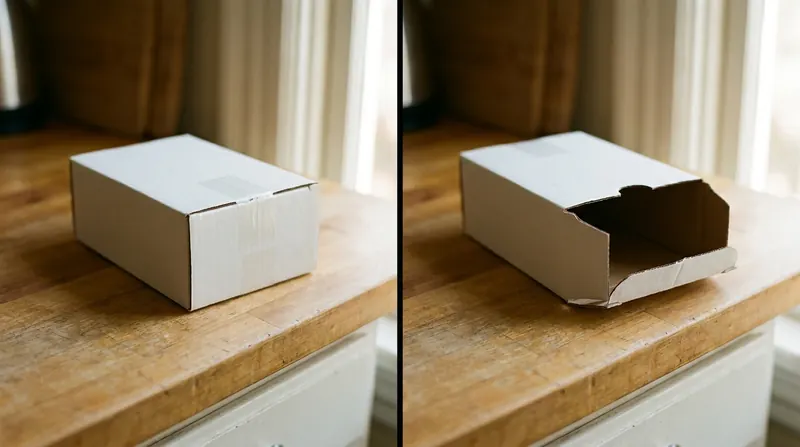
The seller publishes no refund promise.
I looked on the listing, the terms and the returns page, and there is none.
What there is, is the European Union's standard right to cancel a purchase within 14 days.
The seller's policy limits that right for food supplements and anything taken by mouth.
Those may only be returned if they are intact, unopened and with the original seal unbroken.
Once you have pressed the pump, the bottle is yours.
The buyer pays the return shipping, to a logistics warehouse in Planegg, Germany.
The seller says the refund follows within 14 days of the notice.
For a buyer in the US, that return trip across an ocean may cost more than the bottle.
So think of the purchase as final, and decide before the parcel arrives, not after.
No promise, a sealed-bottle return, and an ocean in between.
I do not hold that against the company.
Many food companies do not take back opened food, and it is honest to say so plainly on a returns page.
But it changes how you should think about a first bottle.
It is a small purchase, and it is not a trial with a way out.
Before the First Press
If you do order a bottle, there are four small things I would do before pressing the pump, and one more after.
First, though, the one sentence the label is allowed to make, on a card to keep with the box.
First, look at the seal before you break it.
Once it is broken, the European right to return no longer applies, so this is the moment to decide.
Second, if you take anything daily, show the label to your pharmacist.
The amounts are small and the ingredients ordinary, but a pharmacist can look at your whole list in two minutes, and that is their job.
Third, pick the shelf it will live on when it is not in your pocket.
If there is a dog or a grandchild in the house, that shelf should be a high one.
Fourth, decide what you want from it.
If you want a pocket habit and a labeled bit of B5, you will get exactly that; if you want the herbs from the trials, this is not where they are.
There is a fifth step, and it is the one I would not skip.
Read the store's shipping and returns pages yourself, on the day you order, and keep a copy of the order confirmation.
If something goes wrong with a parcel from abroad, that confirmation is what you will need.
The seller's email and phone number are on it, and on the foot of this page, and both reach a real company in Switzerland.
And if a bottle arrives damaged or leaking, write to the seller before you do anything else.
Describe what you received, keep the packaging, and let them tell you what they will do, since the terms are theirs and not mine.
None of those four steps is complicated.
But together they are the difference between buying something and buying it on purpose.
Cheaper Hours Come First
I would be a poor friend if I sent Walt off to a Swiss store without saying this part.
The things with the best evidence for a clear-headed afternoon are not in any bottle.
They are the plain, dull habits that cost nothing and that the research keeps circling back to.

Water is the first one, and the least glamorous.
In a Berlin study of more than a thousand adults aged 60 to 89, those who were measurably dehydrated did worse over time on a test of processing speed. [11]
That is an association, not a cause.
But a glass of water at four o'clock costs nothing, and it is an easy one to forget in the afternoon.
The second is about vitamins, and it applies to this bottle directly.
The largest review of B-vitamin supplements in healthy adults, covering more than 27,000 people, found little or no effect on thinking over up to five years. [12]
That review looked at folic acid, B12 and B6, not B5, so it does not test this spray.
But it tells you something about adding more of a vitamin to a body that already gets enough.
If you eat an ordinary varied diet, you are almost certainly getting pantothenic acid already.
The label itself says food supplements should not be used as a substitute for a varied and balanced diet.
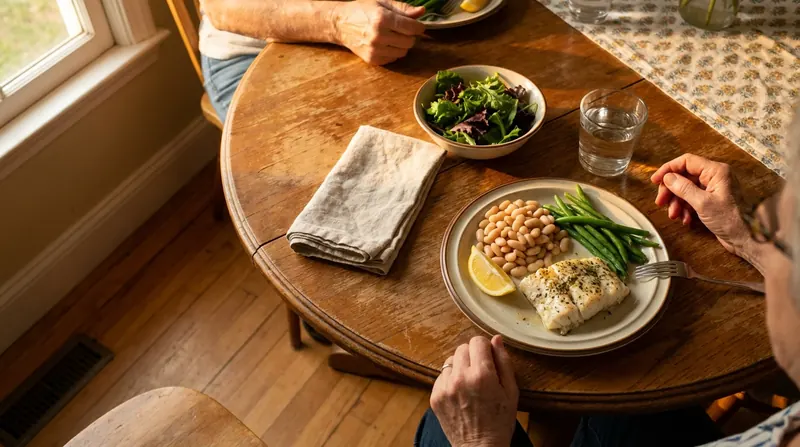
The third is the hour itself.
An unhurried hour, a walk, a conversation with a friend on a porch: those are habits worth keeping whether or not you own a spray.
I am not saying the bottle is useless.
I am saying it should come after those things, not instead of them, and the label agrees with me.
Water, meals and a real slow hour come first. A pocket spray, if you like it, comes after.
What a Slow Hour Is For
I named this section for the hour, because the hour is the part of Walt's routine I would keep even if the bottle ran out.
A slow hour is not a nap and it is not a chore.
It is the stretch of the afternoon when you are awake, unhurried, and not being asked for anything.
Some men read in it.
Some men walk to the end of the road and back, and some sit with a neighbor and argue about the ballgame.
None of that is medicine, and I am not selling it as medicine.
But the label on this bottle ends with the words "a healthy lifestyle," and an unhurried hour is about as plain a piece of one as I know.
Here is how Walt's goes, on a good day.
He sits, he takes the bottle out of his pocket, he presses five times, and then he does the crossword until the light goes orange.
The spray takes ten seconds of that hour.
The other fifty-nine minutes and fifty seconds are the part that has been in his life for years, and they are the part I would protect first.
If you are going to add something to your day, add it to an hour like that.
Tie it to something you already value, and it will last longer than any routine you start from scratch.
The spray takes ten seconds. The hour is the other fifty-nine minutes.
And if you decide against the bottle, keep the hour anyway.
It costs nothing, ships from nowhere, and nobody needs a returns policy for it.
Who This Bottle Suits, and Who It Does Not
After all that reading, here is how I would sort it.
This bottle may suit you if you want a small, labeled amount of vitamin B5 without swallowing anything.
It may suit you if you like a pocket routine, want no caffeine, sugar or alcohol, and respect a label written under strict rules.
- You want a vitamin you can take without a glass of water
- You like a small daily gesture you can tie to a habit
- You want no caffeine, no sugar and no alcohol in it
- You like knowing that the one health sentence was copied from a legal list
- You are fine ordering from a Swiss store and waiting for a parcel
It probably does not suit you if you want the herb amounts from the trials.
Neither the sage nor the bacopa comes close, and the label does not pretend otherwise.
- You want sage or bacopa at the amounts the trials used
- You want a refund promise or an easy return on an opened bottle
- You want delivery in a few days from a US warehouse
- You have a dog who gets into things and no high shelf to keep it on
And if you take anything daily, or you are unsure whether a new supplement fits with what you already take, ask your pharmacist or clinician first.
That goes for this bottle and for every other one on your shelf.
Walt fell somewhere in the middle.
He likes the gesture and the taste, he does not expect the herbs to do much, and he now keeps the bottle on the top shelf when it is not in his pocket.
Every ingredient in this spray, with the amount the label gives for five presses and what the published research used, is set out in the ingredient guide linked at the foot of this page.
The guide also carries the cautions, the full references and the disclosures this page is required to make.
The pocket spray from Lake Maggiore, sent from its Swiss store
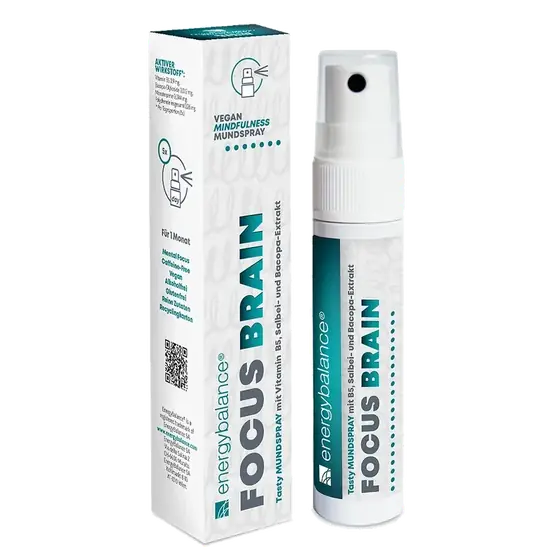
A sugar-free, caffeine-free, alcohol-free spray with vitamin B5 and small amounts of sage and bacopa extract, five sprays into the mouth once a day, in a 25-milliliter bottle made in Switzerland.
SEE THE SPRAY AND WHERE IT SHIPSSold by EnergyBalance SA, Muralto, Switzerland · 25 ml, about 150 presses, five a day for about a month · the European store ships only inside the EU; outside it, the seller sends you to its Swiss store · no refund promise; only sealed bottles can be returned
Questions Walt Asked Me
What Walt wanted to know on the porch
Is this medicine?
No. It is a food supplement made in Switzerland, and its label says it is not a medicinal product.
How long does one bottle last?
About a month. It holds about 150 presses, and the daily dose is five.
Does it have caffeine in it?
No. It has no caffeine, no sugar and no alcohol, and it is sweetened with xylitol.
What does the health sentence on the label actually say?
That pantothenic acid, vitamin B5, contributes to normal mental performance. It is copied from the European Union's approved list and is about the vitamin, not the herbs. [1]
Why 0.9 milligrams of B5?
It is 15 percent of the European reference value of 6 milligrams, the amount a food needs to count as a source. [2]
Are the sage and bacopa at trial amounts?
No. The label lists their compounds in thousandths and hundredths of a milligram, while the trials used hundreds of milligrams of extract. [4] [7]
Can I order it from the US?
Not from the European store, which ships only within the EU. The seller's Swiss store ships worldwide, with shipping set at checkout.
Can I send it back if I don't like it?
Only if it is still sealed and unopened, and you pay the return shipping to Germany. There is no refund promise.
Where is it made?
In the canton of Ticino, in southern Switzerland, according to the seller. The company is based in Muralto, on Lake Maggiore.
What does "Für 1 Monat" on the box mean?
It is German for "for one month." A bottle holds about 150 presses, five a day.
I have a dog. Anything I should know?
Yes. Xylitol is dangerous for dogs, so keep the bottle on a high shelf whenever it is out of your pocket. [10]
The Slow Hour Version
If you only read one part of this page, read this part.
- Focus Brain is a 25-milliliter spray from EnergyBalance SA in Muralto, Switzerland, taken as five presses once a day
- Its only health sentence is about vitamin B5 and is copied word for word from the European Union's approved list
- The bottle holds 0.9 milligrams of B5, exactly 15 percent of Europe's reference value and 18 percent of the American Daily Value
- The sage and bacopa come in fractions of a milligram, far below the amounts in their trials
- It has no caffeine, sugar or alcohol, and its xylitol needs to stay away from dogs
- From the US, you order through the seller's Swiss store; there is no refund promise and only sealed bottles go back

What I Told Walt
Walt asked me, at the end of all this, whether he should order another bottle.
I told him the truth as I read it, which took most of an afternoon and two cups of coffee.
The spray is a well-made small thing, from a company that prints its address, with one honest sentence on the box.
It gives him a labeled little bit of a vitamin he almost certainly already eats.
It gives him a gesture he likes, at the start of the hour he likes best.
And it comes with a label he can read without a lawyer, because a law already trimmed it down to one vitamin's plain facts.
It does not give him the herbs in the amounts anybody has tested.
And it does not come with a way back once he presses the pump.
If that trade suits you, it is a fair one. If it does not, you have lost nothing by reading.
He ordered one from the Swiss store that evening.
It sits on the top shelf above the coffee maker, where the Labrador cannot reach it.
One small bottle, one sentence from Europe's list, and a parcel from Switzerland
A sugar-free, caffeine-free, alcohol-free spray with vitamin B5 and small amounts of sage and bacopa extract, five sprays into the mouth once a day, in a 25-milliliter bottle made in Switzerland.
SEE THE SPRAY AND WHERE IT SHIPSEnergyBalance SA, Via della Salina 2, Muralto, Switzerland · +41 91 942 88 88 · hello@energybalance.com · outside the EU, orders go through the seller's Swiss store · sealed bottles only for returns
And if the bottle is not for you, the hour still is.
Keep the porch, the cold coffee and the crossword, and give the afternoon the sixty minutes it deserves.
P.S. If you take one thing from this page, take the word "normal."
It is the word European law put on this box, and it is the honest size of the promise.
A small vitamin, doing its ordinary job, in a bottle that rides in your pocket.